Global Japanese Sushi Rolls
Highlighted under: Overseas Recipes
I absolutely love making sushi at home! There's something incredibly satisfying about rolling fresh ingredients in rice and nori. Each bite is a delightful mix of flavors that transports me to Japan, even when I'm in my kitchen. I enjoy experimenting with different fillings and toppings, ensuring there's a little something for everyone at the table. Plus, it’s a fun activity to share with family and friends, making meal prep feel more like an event than a chore. Let's dive into creating these delicious, global-influenced sushi rolls together!
During one of my sushi-making adventures, I decided to combine traditional Japanese elements with flavors from across the globe. I experimented with different ingredients like avocado, mango, and spicy tuna. The result was a delightful fusion that excited my taste buds. Each roll tells a unique story, reflecting both the cuisine I adore and my creativity.
To ensure my sushi was as authentic as possible, I focused on the rice. I used short-grain sushi rice and seasoned it with rice vinegar and a touch of sugar, which perfectly balances the salty and sweet. This is a key tip for achieving that perfect sushi experience!
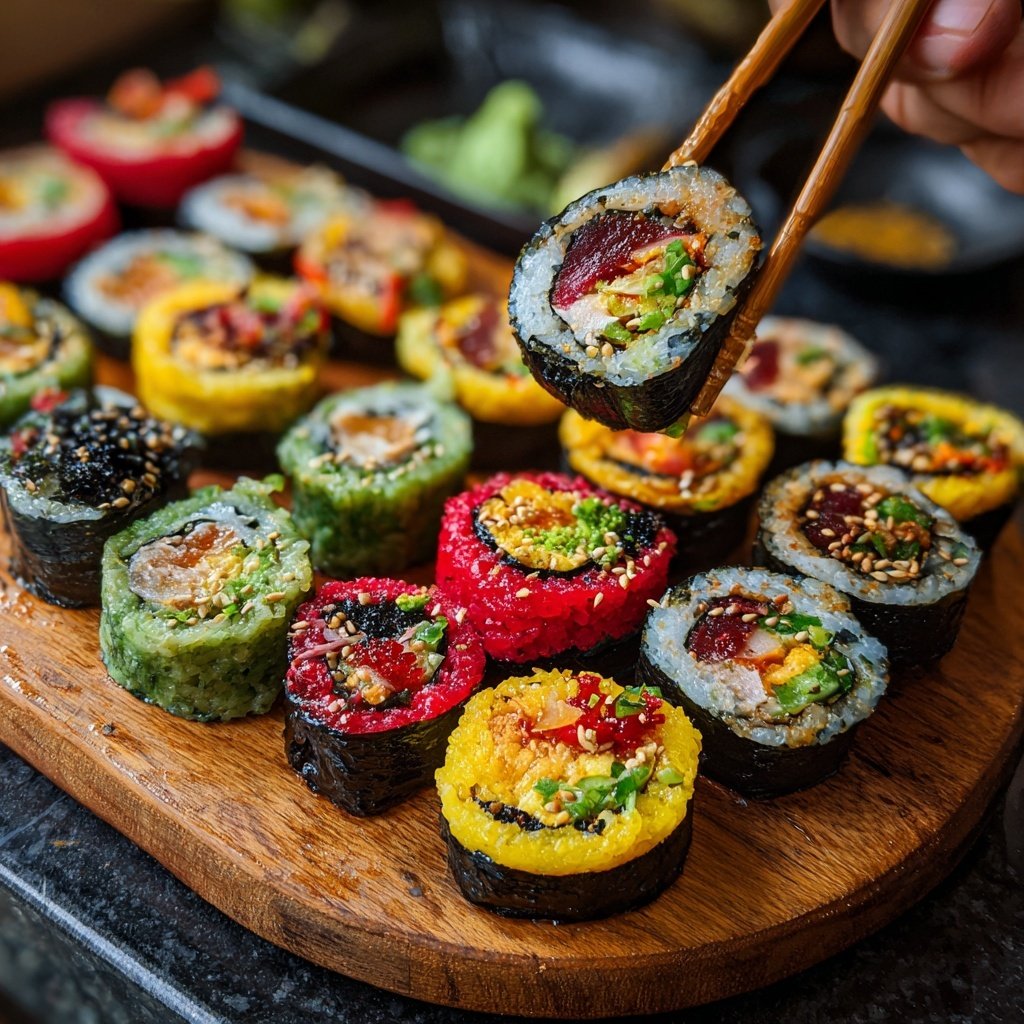
Why You Will Love This Recipe
- A fusion of traditional Japanese flavors with global inspirations
- Customizable fillings that cater to all taste preferences
- A fun and engaging cooking activity for friends and family
Mastering Sushi Rice
Getting the sushi rice just right is crucial for delicious sushi rolls. Rinsing the rice until the water runs clear removes excess starch, preventing the rice from becoming gummy. After cooking, allow the rice to cool slightly; it should be warm but not hot when you mix in the rice vinegar, sugar, and salt. This gives the rice the right flavor and sticky texture, essential for rolling. Aim for a glossy sheen on the rice before using it, which indicates it's properly seasoned.
If you don’t have a rice cooker, you can simmer the sushi rice on the stove. Combine it with the water in a saucepan and bring it to a boil. Once boiling, reduce to low heat, cover, and let it cook for about 18-20 minutes until all the water is absorbed. Remove from heat and let it sit covered for an additional 10 minutes. Fluff it with a fork before adding the vinegar mixture for an even texture.
Choosing and Preparing Fillings
The beauty of sushi rolls lies in their versatility, allowing you to choose fillings that cater to different tastes. For a refreshing option, opt for cucumber and avocado; these ingredients provide a creamy and crunchy texture. If you’re feeling adventurous, try incorporating fruits like mango, which adds a sweet, tropical flavor that pairs beautifully with savory ingredients like tuna. Always ensure your fish is sushi-grade if using raw, as this guarantees quality and safety in consumption.
For additional flavor, consider marinating your tuna in a mix of soy sauce and sesame oil for about 15 minutes before using it as a filling. This enhances the umami profile of the sushi and adds a layer of complexity to the overall taste. Don't hesitate to experiment with other fillings like pickled vegetables or herbs; they can elevate your sushi experience and make it truly unique to your palate.
Rolling and Serving Techniques
Learning to roll sushi may take a little practice, but using a bamboo mat can simplify the process. As you roll the nori, apply even pressure to ensure a compact roll. It’s helpful to keep a bowl of water nearby to moisten your hands and seal the edges of the roll. If the nori is cracking while you roll, it might be too dry, so lightly moisten the nori surface before adding rice. Conversely, if it feels too sticky, sprinkle a bit of sesame oil on your hands to manage the rice without it sticking excessively.
When slicing your rolls, use a sharp knife dipped in water to achieve clean cuts. This prevents the rice and fillings from squishing out. Aim to cut the roll into six to eight pieces for bite-sized servings. Consider elevating the presentation by arranging the sushi on a platter and garnishing it with sesame seeds, avocado slices, or even edible flowers for a stunning visual appeal that celebrates your creation.
Ingredients
Gather the following ingredients and let's get rolling!
Sushi Rice & Nori
- 2 cups sushi rice
- 2 1/2 cups water
- 1/4 cup rice vinegar
- 2 tablespoons sugar
- 1/2 teaspoon salt
- 4 sheets of nori
Fillings (Choose Your Favorites)
- 1 avocado, sliced
- 1 cucumber, julienned
- 1 mango, sliced
- 4 ounces sushi-grade tuna, diced
- 1/4 cup cream cheese (optional)
Toppings & Dipping Sauce
- Soy sauce for dipping
- Pickled ginger
- Wasabi
- Sesame seeds (for garnish)
Make sure to have all your ingredients ready before you start rolling!
Instructions
Follow these steps to create your sushi rolls:
Prepare the Sushi Rice
Rinse the sushi rice under cold water until the water runs clear. Combine it with water in a rice cooker and cook according to the manufacturer's instructions. Once cooked, let it cool slightly, then mix in rice vinegar, sugar, and salt.
Lay Out the Nori
Place a sheet of nori, shiny side down, on a bamboo sushi mat or a clean surface.
Spread the Rice
Wet your hands to prevent sticking, then take a handful of rice and spread it evenly over the nori, leaving a small margin at the top.
Add Fillings
Place your preferred fillings in a line across the center of the rice-covered nori.
Roll It Up
Using the bamboo mat, gently roll the nori over the fillings, applying slight pressure to form a tight roll. Seal the edge with a bit of water.
Slice and Serve
Use a wet, sharp knife to cut the roll into bite-sized pieces. Serve with soy sauce, pickled ginger, and wasabi.
Enjoy your homemade Global Japanese sushi rolls!
Pro Tips
- For extra flavor, try adding a drizzle of spicy mayo on top of your rolls before serving. You can also customize your roll with different sauces or ingredients based on your preferences.
Storage and Make-Ahead Tips
If you plan to prepare sushi rolls in advance, it's best to store the ingredients separately. Sushi rice can be kept in an airtight container in the refrigerator for up to a day. However, for optimal freshness, it's best to use it the same day it's made. Any cut vegetables or fish should also be kept chilled and tightly wrapped to prevent them from drying out or losing flavor.
Since the texture of sushi rice can change when refrigerated, if you do need to reheat it, steam it lightly instead of using a microwave, which can dry it out. For sushi rolls already made, they can be wrapped tightly in plastic wrap and stored in the fridge for a few hours, but be aware they may lose some crispness.
Variations and Creative Ideas
Consider adding a twist by incorporating non-traditional fillings like roasted vegetables or spicy sauces to cater to diverse diets, including vegan or vegetarian options. For a crunch, try tempura-fried vegetables or crispy shallots as fillings. These not only add texture but also make your sushi rolls visually appealing.
You can also experiment with flavored sauces when serving sushi rolls. A drizzle of spicy mayo, made with mayonnaise and sriracha, adds a creamy and zesty kick, while a tangy ponzu sauce provides a citrusy contrast that brightens the flavors of the fillings. Tailoring your sauce to match your fillings can elevate the entire sushi experience.
Questions About Recipes
→ Can I use brown rice instead of sushi rice?
While you can use brown rice for added nutrition, it has a different texture and flavor, which may affect the final result.
→ How do I keep sushi rolls from falling apart?
Make sure to pack your fillings tightly and seal the edges of the nori properly. Wetting your hands and the knife during preparation can also help.
→ What type of fish is safe to use for sushi?
Always use sushi-grade fish, such as tuna, salmon, or yellowtail. It's vital to source from a reputable supplier.
→ Can I make these rolls ahead of time?
It's best to make sushi rolls fresh, but you can prepare the ingredients in advance. Store rolled sushi tightly wrapped in plastic wrap in the fridge for up to 4 hours.
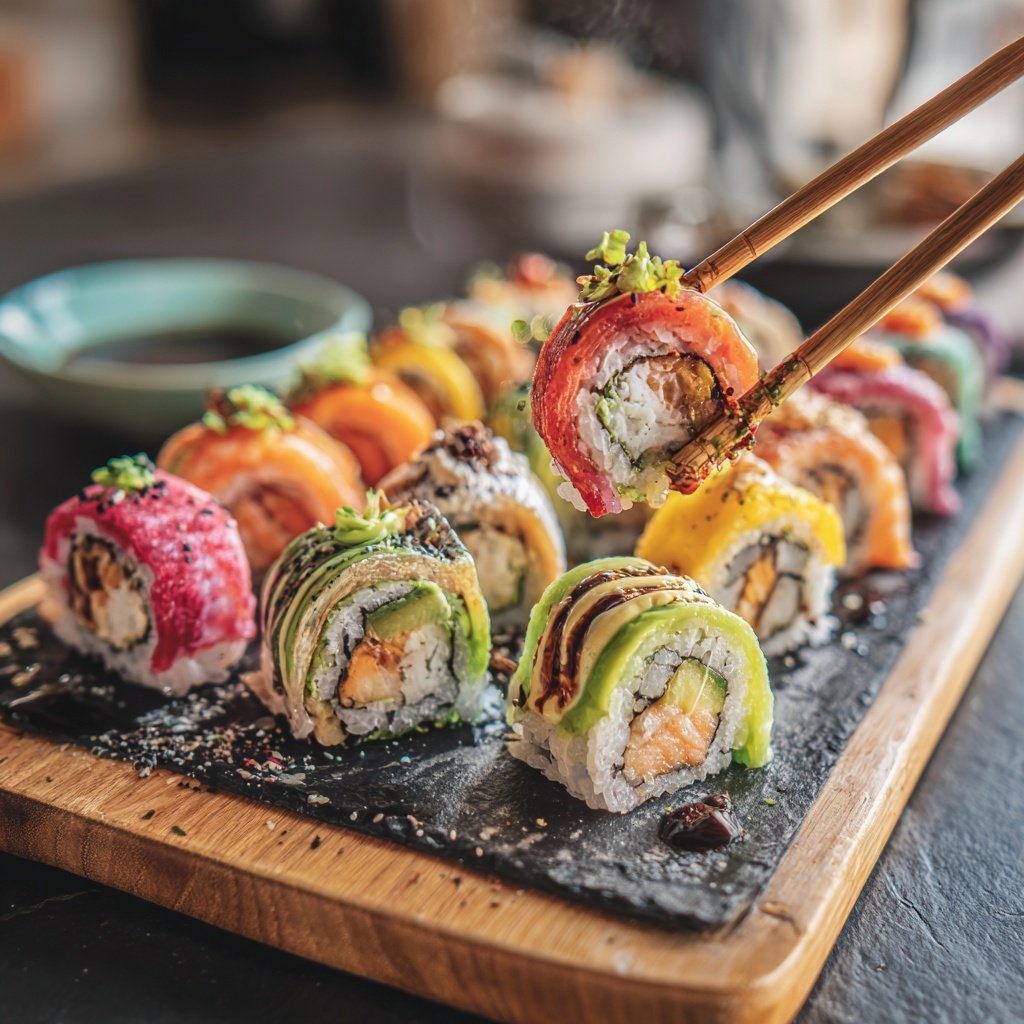
Global Japanese Sushi Rolls
Created by: The Chefquintinkitchen Team
Recipe Type: Overseas Recipes
Skill Level: Intermediate
Final Quantity: 4 rolls
What You'll Need
Sushi Rice & Nori
- 2 cups sushi rice
- 2 1/2 cups water
- 1/4 cup rice vinegar
- 2 tablespoons sugar
- 1/2 teaspoon salt
- 4 sheets of nori
Fillings (Choose Your Favorites)
- 1 avocado, sliced
- 1 cucumber, julienned
- 1 mango, sliced
- 4 ounces sushi-grade tuna, diced
- 1/4 cup cream cheese (optional)
Toppings & Dipping Sauce
- Soy sauce for dipping
- Pickled ginger
- Wasabi
- Sesame seeds (for garnish)
How-To Steps
Rinse the sushi rice under cold water until the water runs clear. Combine it with water in a rice cooker and cook according to the manufacturer's instructions. Once cooked, let it cool slightly, then mix in rice vinegar, sugar, and salt.
Place a sheet of nori, shiny side down, on a bamboo sushi mat or a clean surface.
Wet your hands to prevent sticking, then take a handful of rice and spread it evenly over the nori, leaving a small margin at the top.
Place your preferred fillings in a line across the center of the rice-covered nori.
Using the bamboo mat, gently roll the nori over the fillings, applying slight pressure to form a tight roll. Seal the edge with a bit of water.
Use a wet, sharp knife to cut the roll into bite-sized pieces. Serve with soy sauce, pickled ginger, and wasabi.
Extra Tips
- For extra flavor, try adding a drizzle of spicy mayo on top of your rolls before serving. You can also customize your roll with different sauces or ingredients based on your preferences.
Nutritional Breakdown (Per Serving)
- Calories: 300 kcal
- Total Fat: 8g
- Saturated Fat: 1g
- Cholesterol: 15mg
- Sodium: 280mg
- Total Carbohydrates: 54g
- Dietary Fiber: 2g
- Sugars: 5g
- Protein: 7g